Tuesday, April 30, 2013
Testing Patience and Understanding
Testing, and the subsequent scoring process, yield important information to teachers. The potential use of feedback for those involved in the teaching and learning dynamic can stimulate corresponding adjustments that can leverage success in future tasks. I understand the benefits and agree with the concept. However, with that said, like most anything else, it should be performed in moderation, not just in terms of frequency, but also in terms of emphasis.
It is difficult to justify to participants, in small desks and large, that the investment in precious resources of time and money is worth the possible outcomes of the high stakes assessments emerging out of the expansive Common Core tests. If any school calculated the amount of time teachers spend outside of their classrooms on staff development activities, conferences, scoring workshops, plus the class time devoted to test administration, it would total a cost that is taxing, even in times of a healthy economy and certainly stressful in a difficult economy. Add the cost of substitutes to cover classes for teachers involved in Common Core related tasks and the concern grows more. No matter how effective the substitute teacher is, it's still someone who finds her/himself in a classroom with far less understanding of the unique needs of individuals and less than a firm grasp on the scope and sequence of the curriculum. This last point exacts an instructional cost that must be factored in to any equation measuring the price of the latest educational reform.
Speaking of reform efforts. Here's an interesting article that draws the reader's attention, particularly those concerned parents with a lot at stake in the Common Core wave via their children but rendered to the sidelines by lacking the perspective on significant actors in the drama who deftly impact the play from behind the scenes. The piece refers to "corporate reform."
http://www.theatlantic.com/national/archive/2013/04/the-coming-revolution-in-public-education/275163/

Friday, April 19, 2013
A Glimpse of the News
Each school day I receive a list of education related stories from throughout New York via the New York State School Boards Association. Here's a snapshot of education articles extracted from a single day. It should offer you a flavor of issues that are impacting public school education. The first seven articles refer to the state mandated assessments that were administered this week. The final article at the bottom of the collection discusses the fiscal peril facing rural school districts in northern New York.
These are not the best of times in public school education...
Rochester Democrat & Chronicle
Syracuse Post Standard
Pencils down! Central New York parents tell schools their children won't take state tests
Albany Times Union
New York Times (Paid Subscription May be Required)
Long Island inquiry includes claim of altered high school exam score
New York Daily News
New York Post
Kingston Daily Freeman
Watertown Daily Times
Future of north country public schools focus of SLU symposium
Monday, April 8, 2013
Poor Sports
Let me preface my remarks this evening with a qualifier.
I really enjoy sports, as both a participant and a spectator. I earned varsity letters in three different high school sports and went on to play soccer in college. My son and daughter both competed in intercollegiate athletics as well. One of my sisters has twice been selected as the top high school Track coach in the United States while leading teams to twenty state championships in cross country.
With that as a backdrop, I want to question the perspective of sports in our society.
Despite being a life-long loyal fan of the Detroit Tigers, I had to wonder about the juxtaposition of the news that their star pitcher, Justin Verlander, had signed a contract extension that will net him over 200 million dollars at a time when our school district approaches the final and anxious phase of earning enough public support to approve an annual operating budget of just under 7 million dollars. Put in another way, our public school system could nurture the dreams and sustain the hope of our 320 learners for over two decades (even accounting for inflation over that span of time) with the money that Verlander will receive over the life of his contract. Shortly thereafter, the San Francisco Giants signed all-star catcher Buster Posey for 189 million dollars. It's mind boggling and it will likely continue as teams exert their resources in the quest for championships.
Why am I ranting? Not just because of the extraordinarily large and obscene contracts provided to athletes, not just because in too many public school districts sports remains immune from the same financial threats that have pinched academics, and not just because the heritage and tradition of sports (and their mascots) have interrupted attempts of school districts seeking to avoid fiscal fatalities through merging systems, but, because the latest scandal and cover-up of a large Division I sports program has highlighted the wavering and situational ethics that misguidesamateur athletics in college.
Although credible film and print journalists have indicated that the officials of Rutgers University (the flagship of the state university system in New Jersey) had reviewed the film clips of their men's basketball coach, Mike Rice, verbally and physically assaulting players in practice in December, they did not act to fire him until they were shamed when the video was aired on national sports channels. The athletic director of Rutgers has resigned, and he will receive over a million dollars in a pay-out - how long will you have to work to earn a million dollars?). The legal counsel representing the university in the process after the film was first reviewed by college staff in December also resigned. There is an ongoing investigation into the manner in which theattempted cover up incident was handled at Rutgers.
This incident occurs while the terrible experience at Penn State University still lingers over the college sports landscape. You will likely recall that an assistant football coach of the mighty Nittany Lions, serving on the staff of the legendary head coach Joe Paterno, was found guilty of a number of charges involving inappropriate sexual relationships with boys. As the story unfolded, it was revealed that there were apparently a number of Penn State staff members (including Paterno) who were alerted to the allegations, with rather strong evidence, but did not initiate the proper authorities. It seemed that the need to protect the famous football program (and maybe the revenue it attracted) overwhelmed the need to exercise moral courage and address the issue and prevent additional boys from being victimized.
The Penn State fiasco was followed by the "confession" of seven time Tour de France champion bicyclist Lance Armstrong in which he finally admitted what had long been suspected - he used performance enhancing drugs to ride to victory after victory.
The list of such moral losses could go on and on.
When will it stop? What will we learn from these incidents? What can be done to refocus attention on the integrity of sports and the benefits that can accrue from competition, the collaborative team efforts, the goal orientation, and commitment, and many other positive attributes of sports?
One of my favorite quotes regarding athletics comes from John Wooden, legendary basketball coach of UCLA, (the University of California at Los Angeles):
"Sports don't build character, they reveal character."
I really enjoy sports, as both a participant and a spectator. I earned varsity letters in three different high school sports and went on to play soccer in college. My son and daughter both competed in intercollegiate athletics as well. One of my sisters has twice been selected as the top high school Track coach in the United States while leading teams to twenty state championships in cross country.
With that as a backdrop, I want to question the perspective of sports in our society.
Despite being a life-long loyal fan of the Detroit Tigers, I had to wonder about the juxtaposition of the news that their star pitcher, Justin Verlander, had signed a contract extension that will net him over 200 million dollars at a time when our school district approaches the final and anxious phase of earning enough public support to approve an annual operating budget of just under 7 million dollars. Put in another way, our public school system could nurture the dreams and sustain the hope of our 320 learners for over two decades (even accounting for inflation over that span of time) with the money that Verlander will receive over the life of his contract. Shortly thereafter, the San Francisco Giants signed all-star catcher Buster Posey for 189 million dollars. It's mind boggling and it will likely continue as teams exert their resources in the quest for championships.
Why am I ranting? Not just because of the extraordinarily large and obscene contracts provided to athletes, not just because in too many public school districts sports remains immune from the same financial threats that have pinched academics, and not just because the heritage and tradition of sports (and their mascots) have interrupted attempts of school districts seeking to avoid fiscal fatalities through merging systems, but, because the latest scandal and cover-up of a large Division I sports program has highlighted the wavering and situational ethics that misguides
Although credible film and print journalists have indicated that the officials of Rutgers University (the flagship of the state university system in New Jersey) had reviewed the film clips of their men's basketball coach, Mike Rice, verbally and physically assaulting players in practice in December, they did not act to fire him until they were shamed when the video was aired on national sports channels. The athletic director of Rutgers has resigned, and he will receive over a million dollars in a pay-out - how long will you have to work to earn a million dollars?). The legal counsel representing the university in the process after the film was first reviewed by college staff in December also resigned. There is an ongoing investigation into the manner in which the
This incident occurs while the terrible experience at Penn State University still lingers over the college sports landscape. You will likely recall that an assistant football coach of the mighty Nittany Lions, serving on the staff of the legendary head coach Joe Paterno, was found guilty of a number of charges involving inappropriate sexual relationships with boys. As the story unfolded, it was revealed that there were apparently a number of Penn State staff members (including Paterno) who were alerted to the allegations, with rather strong evidence, but did not initiate the proper authorities. It seemed that the need to protect the famous football program (and maybe the revenue it attracted) overwhelmed the need to exercise moral courage and address the issue and prevent additional boys from being victimized.
The Penn State fiasco was followed by the "confession" of seven time Tour de France champion bicyclist Lance Armstrong in which he finally admitted what had long been suspected - he used performance enhancing drugs to ride to victory after victory.
The list of such moral losses could go on and on.
When will it stop? What will we learn from these incidents? What can be done to refocus attention on the integrity of sports and the benefits that can accrue from competition, the collaborative team efforts, the goal orientation, and commitment, and many other positive attributes of sports?
One of my favorite quotes regarding athletics comes from John Wooden, legendary basketball coach of UCLA, (the University of California at Los Angeles):
"Sports don't build character, they reveal character."
Saturday, March 23, 2013
Equity and Excellence
Equity and excellence are often viewed as two competing concepts that are mutually exclusive, much like the perceived contrasts between cooperation and competition. Here's an interesting article that may make you squirm a bit with cognitive dissonance and perhaps even moral discomfort - but, it's worth reading. Equity and excellence should not be separated by an "either/or"dichotomy but juxtaposed with an "and/both."
http://www.theatlantic.com/national/archive/2011/12/what-americans-keep-ignoring-about-finlands-school-success/250564/
http://www.theatlantic.com/national/archive/2011/12/what-americans-keep-ignoring-about-finlands-school-success/250564/
The People Skills Test
Education is ultimately a people oriented business. Despite the expanded influence and use of technology and virtual classes and even virtual schools, the essence of the teaching and learning equation involves human dynamics.
Here's an article that demonstrates and reaffirms the value and need for "people skills." The report focuses on the medical field and the significant role that interpersonal communication represents in leveraging the process of doctors applying knowledge and skill. For an additional perspective on the value of this factor, read Malcom Gladwell's best selling book, Blink (see page 40).
http://www.nytimes.com/2011/07/11/health/policy/11docs.html?pagewanted=all&_r=0
Here's an article that demonstrates and reaffirms the value and need for "people skills." The report focuses on the medical field and the significant role that interpersonal communication represents in leveraging the process of doctors applying knowledge and skill. For an additional perspective on the value of this factor, read Malcom Gladwell's best selling book, Blink (see page 40).
http://www.nytimes.com/2011/07/11/health/policy/11docs.html?pagewanted=all&_r=0
Learners of All Ages and All Stages
How can a school become a vibrant and sustaining learning environment if the resources and the mission are solely based on the learners between the ages of five and eighteen? How can we, living at a time of accelerated changes socially, politically, financially, instructionally, and technologically seek to advance if we isolate our efforts on the needs of young learners? How can we expect to promote progress if we remain focused on children alone?
Many are the districts that preach commitment to developing the "whole child" or a focus on "all learners succeeding" as a means to explain that all aspects of an individual are addressed and nurtured. A brief conversation with the leaders of such schools with the aforementioned slogans would reveal that the "all learners" or "whole child" are euphemisms for the children in the school, not the adults. Truly though, an educational enterprise that seeks to optimize learning experiences must accept and respect that there are multiple stages and ages of learning among the greater school population that inhabits the building. That is, beyond the spectrum (or stages) of learning abilities among those we teach, are the different experience levels (ages) of those we serve. What are we doing, and how are we doing, in terms of developing the potential for our adult learners at school?
Four full days of professional staff development, together with one hour faculty meeting held after long, tiresome days of teaching are hardly sufficient to enhance instructional strategies and offer collaborative opportunities for curriculum integration or extend professional dialogue during common times for people who otherwise spend their work days operating apart from each other in classrooms that form an archipelago of islands.
Perhaps the biggest obstacle to providing venues for teachers to cooperate and learn together is the perception by all too many outside of education that teachers only "work" when they are standing in a classroom before rows of children. This view is so firmly embedded in the general public since most of them have experienced days, months, and years as former learners in such an atmosphere of teacher working with kids that it's difficult to change that mental picture enough to support the need for more staff development promoting teacher growth.
That's as arcane a notion as assuming that lawyers only work when they are arguing a case before a filled courtroom, or doctors only work when applying their knowledge and skill at an operating table. Where is the chance to engage in meaningful exchange of ideas and exploration of possibilities designed to enrich the learning experience for children? Where is our investment in improving the prospects of teachers regarding their interaction with children, their understanding of freshly born research in their field, their expertise in the ever expanding promise of technological instruments and applications?
Until we wrestle with this complex issue and comprehend how vital the outcome is to furthering our need to improve learning experiences for all, we will continue to struggle with our achievement levels. Our governor has publicized his call for a bar exam for future teachers that rivals the standard entry level benchmark of the legal profession. But surely, it does not or should not stop there. After all, who would want to obtain the services of a lawyer who was able to pass the gate-keeping bar exam, but has not maintained knowledge or enriched skills since passing the bar exam? How can you be certain that the doctor who received his/her medical degree, has kept up with changes in their field of expertise? A bar exam for teachers is not enough. We must invest in the opportunity for our teachers to be recognized as learners at all ages and stages as well by offering time during the school day to collaborate and engage in professional learning activities.
In other words, teachers should be treated in the same manner that many other workers are. For example, if General Electric or General Motors want to introduce a new technology, provide new knowledge, or improve the specific
skills of employees they perform those services during the work day for as many days as necessary in order to equip the workers with the competitive edge to surpass the output and performance of others in their market. They do not conduct such activities during over-time outside of the normal work day. Likewise, schools should be able to invest the money and time to elevate the work of teachers and staff in the school.
Tuesday, March 19, 2013
Tools of the Trade
Microscopes, Telescopes, and Kaleidoscopes
Selecting the right instrument for any task is important. A microscope is too often employed in the analysis of reports and statistics. Robert J. Kriegel, writing in his book, If it ain’t broke… BREAK IT!, refers to a puzzle that demonstrates how we often apply sophisticated problem solving templates on challenges that are relatively simple, thus confusing efforts. He uses the test below to illustrate his point.(Kriegel, 136)
Which of the following letters is most out of place?

The two most common answers are either the “c”, because it lacks a stem, or the “p”, because it 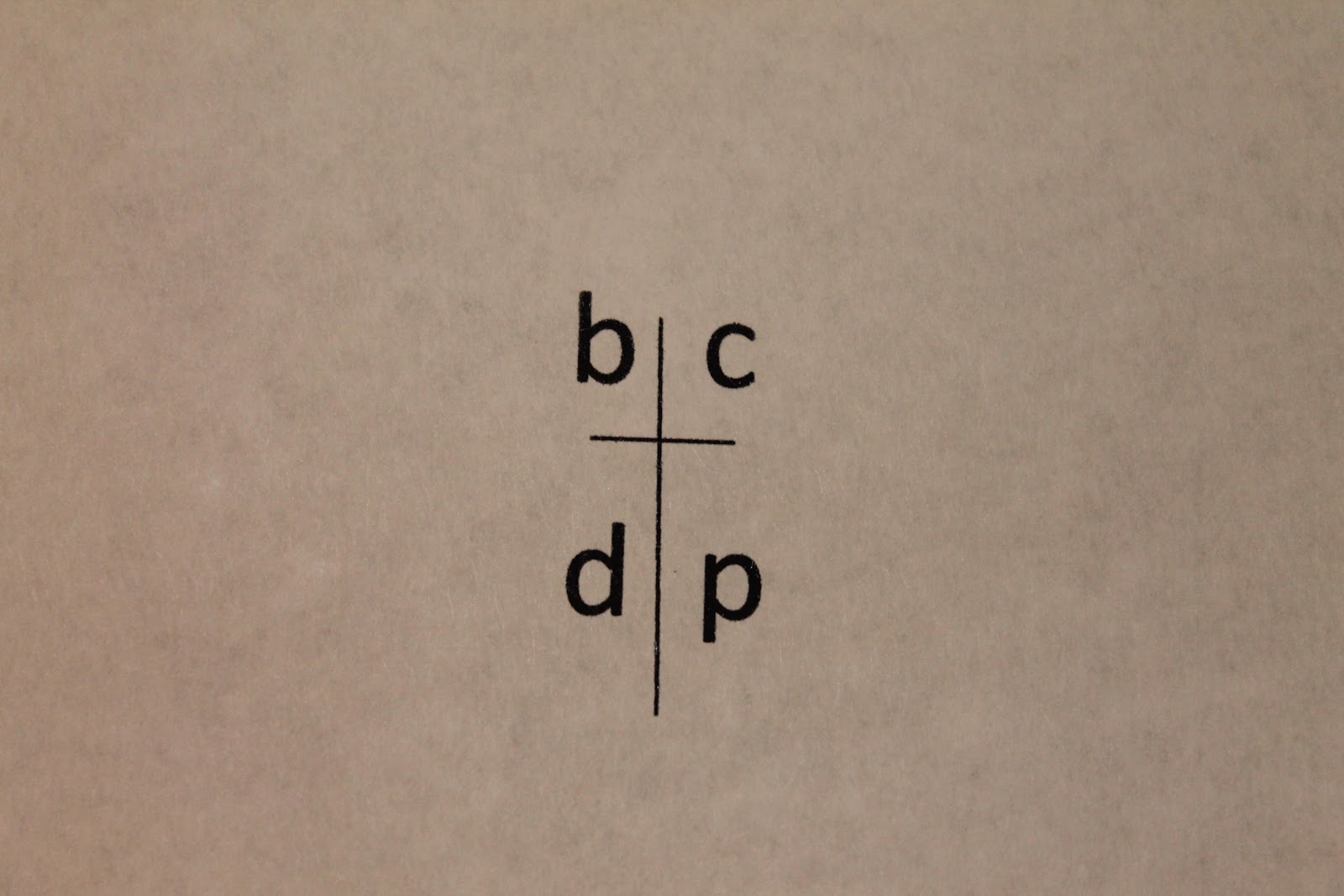
doesn’t follow the alphabetical pattern. However, the correct answer is the large “t” formed to divide
the four letters that it dwarfs. A trick? No, just a hasty application of preconceived solutions.
Some results are very difficult to understand from up close under a microscope. Immersion can obscure an investigation. Instead we could benefit by exploring distant possibilities and forecasting future opportunities with a telescope. Once we have our target in sight we can view the data through a kaleidoscope that offers ever-changing patterns and perspectives. Rowan refers to the practice of kaleidoscopic thinking as, “The ability to see new patterns in old phenomena by taking the existing fragments, twisting them, and coming up with an exciting new view.”(Rowan, 175) The intention, as Waterman advises, is to seek “a difference that makes a difference.”(Waterman, 124)
Subscribe to:
Posts (Atom)